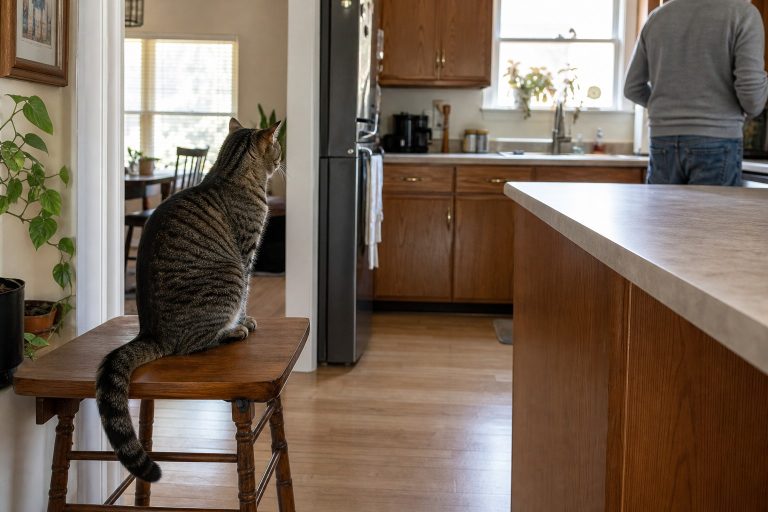

A scratched sofa can feel personal, especially when a perfectly good scratching post stands untouched across the room. To a cat, however, scratching is not misbehavior. It stretches the body, maintains the claws and leaves both a visible and scent-based message.
Redirecting works best when the alternative satisfies the same need in the same location. Punishment may stop the action for a moment, but it does not make the need disappear. The same function-first approach can help when redirecting a cat from kitchen counters.
Notice the pattern before buying anything
Look at when and where scratching happens. Many cats scratch after waking, during an excited greeting or at a doorway that marks an important route. The chosen surface also tells you something: a sofa arm offers height and resistance, while a rug invites horizontal scratching.
Measure the scratched area and watch your cat’s posture. A useful replacement should allow the same vertical reach or horizontal stretch without wobbling.
Place the alternative right beside the target
A post hidden in a spare room cannot compete with the sofa in the center of family life. Put the scratcher directly in front of the damaged corner or beside the doorway your cat uses. Once the new habit is established, you can move it a few inches at a time if needed.
Stability matters more than decorative appeal. Choose a broad base or secure the scratcher so it does not tip. Sisal, corrugated cardboard, wood and dense fabric all feel different; preference varies, so a small trial is useful.
Make the new choice easy
Drag a wand toy around the post, sprinkle catnip if your cat responds to it or reward calm exploration with a treat. You do not need to move your cat’s paws across the surface, which can create discomfort or avoidance.
Temporarily protect the furniture with a fitted cover, smooth panel or pet-safe double-sided product. The goal is to reduce the reward of the old texture while the new location becomes familiar. Test any adhesive on a hidden area first.
Maintain the setup
A heavily used cardboard pad is a success, not an eyesore to remove too soon. Replace it when it collapses or sheds excessively, and trim loose strands from posts. Keep more than one scratching station in homes with multiple activity zones.
If scratching increases suddenly alongside hiding, tension between pets or another behavior change, consider what changed in the environment. For ordinary furniture scratching, though, the formula is simple: match the angle, match the material, place it where the cat already wants to scratch and reward the better option.
Protect your expectations as well as the sofa. Redirecting a long-standing habit can take days or weeks, and occasional mistakes are normal. Keep nails maintained in a way your cat tolerates, repair loose upholstery threads and continue making the approved surface convenient. Consistency is quieter and more effective than a series of dramatic corrections.