
A cat can ignore the kitchen for most of the day, then appear the moment a cutting board comes out. From the cat's side, the counter may offer several things at once: food smells, a clear view, warmth, access to a person, and a long history of interesting reactions.
That is why removing the cat without changing anything else rarely settles the issue. The counter is still useful, and the next visit may still produce a crumb, a dropped ingredient, or immediate attention.
A more workable plan has three parts: remove the rewards you control, provide an acceptable place that serves a similar purpose, and make that place worth using before the kitchen gets busy. The goal is not to win a standoff. It is to make the counter less successful and another choice easier to repeat.
First, Work Out What the Counter Is Paying For
Start with the outcome, not a theory about the cat's personality. What tends to happen immediately before and after the jump?
- Food: Crumbs, dirty plates, cooling pans, grocery bags, or a person who occasionally shares food from the counter.
- Height and view: A clear position above floor traffic, especially when people, children, or another pet are moving through the room.
- Company: A way to be close to the person preparing food without standing underfoot.
- Attention: Eye contact, conversation, lifting, chasing, or a dramatic reaction every time the cat appears.
- Comfort: Sun, warmth from an appliance, or a surface that is more appealing than the available resting spots.
- Habit: The counter has paid off often enough that checking it remains worthwhile, even when it is empty most of the time.
Current FelineVMA caregiver guidance on unwanted behaviors specifically notes that counters can become associated with food or proximity to people. The useful question is not which motive sounds most “cat-like,” but which reward is actually available in this kitchen.
Watch for two or three ordinary days. Does the cat arrive only during meal preparation? Use the counter to reach a window? Jump up after being ignored? Check the same corner where food once appeared? The answer determines which part of the plan needs the most attention.
Remove the Rewards You Control
Food is the simplest place to begin because the household can change it immediately. Put ingredients away, clear plates rather than leaving them to soak, wipe up crumbs and grease, and secure bread, fruit, pet food, and trash that the cat can reach. This is behavior management, not a demand for a spotless kitchen.
Stop offering food from the counter, including the occasional “just this once” piece while cooking. Intermittent rewards can keep a well-established check worthwhile: the cat does not need to find something every time if the possibility remains.
Be careful about the exit strategy as well. Tossing a treat to the floor may remove the cat quickly, but it can also create a clean sequence: jump up, wait for the person, receive food. If food is needed to handle an immediate safety problem, use it to get through that moment, then change the setup so it does not become the routine.
Attention can work the same way. A lecture, chase, or repeated lifting may still be interaction. Keep the response brief, then put effort into the behavior you want to see elsewhere.
If the cat's meals currently happen in a busy cooking path, the calm feeding-area guide can help separate the feeding routine from food preparation. A better feeding location is not a cure for counter use, but it can make the household's food rules easier to understand and maintain.
Offer a Place That Does the Same Job
A bed on the floor is not a true substitute for a counter when the cat is seeking height, visibility, or proximity. The alternative has to compete.
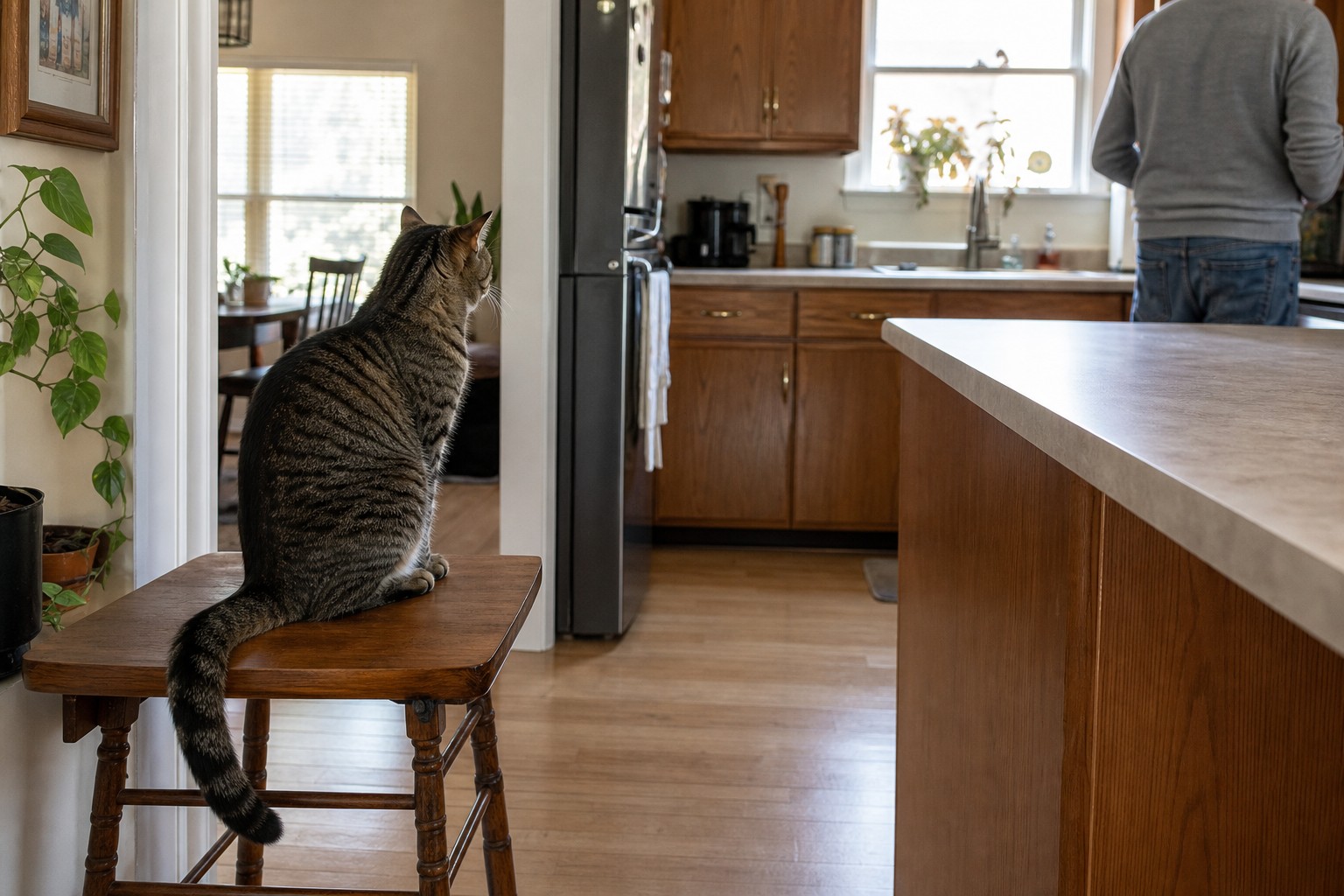
In many kitchens, that might be a stable stool, chair, window platform, perch, or cat tree near the edge of the room. It should let the cat see some of the activity without occupying the food-preparation zone or creating an easy launch point straight back onto the counter.
Evaluate it from the cat's route:
- Is it high enough to provide a useful view?
- Is the surface stable and large enough to settle on?
- Can the cat reach and leave it without crossing a slippery or crowded landing?
- Is it close enough to the household activity the cat wants to observe?
- Can another cat block the approach or take over the spot?
The AAFP/ISFM environmental-needs guidelines describe a feline safe place as often raised and emphasize usable choices within the environment. That supports offering height; it does not prescribe a particular product or prove that a perch with workable routes, landings, and exits will solve every counter habit.
If the counter is also the most interesting place in an otherwise quiet day, a broader indoor enrichment routine can add observation, play, searching, and contact elsewhere. Enrichment may reduce the counter's monopoly on activity, but it cannot compensate for food that remains available there.
Teach the Alternative Before the Kitchen Gets Busy
Practice when the counter is empty and nobody is carrying a hot pan.
- Make the alternative easy to reach.
- Invite the cat onto it with a familiar cue or a lure if needed.
- Reward while all four paws are on that surface.
- Step away, reset, and repeat later rather than running a long drill.
- Begin rewarding voluntary use when the cat chooses the spot without being asked.
The reward can be a small piece of the cat's normal food allowance, a brief play opportunity, or attention the cat actually seeks. The FelineVMA position statement on positive reinforcement emphasizes that a reward must matter to the individual and follow the desired behavior promptly. In this kitchen, the behavior being paid should be “use this place,” not “visit the counter and then move.”
Start before the usual problem moment when possible. If the cat typically arrives when dinner preparation begins, guide the cat to the perch as the first ingredients come out and reward settling there. Catching the correct choice early is clearer than waiting for a jump and trying to repair the sequence afterward.
In a multi-cat home, one approved perch may not be functionally available to both cats. Separate turns or another location may be necessary if one cat controls the route. That is a resource-access problem, not a failure to understand the cue.
What to Do When the Cat Jumps Up Anyway
First deal with the immediate risk. Move food, cover a hot surface, put down a knife, or pause the cooking task. Safety is allowed to interrupt the training plan.
Then keep the removal uneventful. Calmly cue or guide the cat toward the perch or other alternative. If the cat is comfortable being lifted, a brief, gentle move may be reasonable; a tense or highly aroused cat should not be grabbed. Avoid chasing, yelling, hitting, spraying, or turning the moment into a prolonged negotiation.
Do not automatically produce a treat the instant the cat lands on the floor. Reset, invite the intended behavior, and reward it clearly. If you have to lure the cat away from danger, treat it as emergency management rather than the lesson you repeat every evening.
FelineVMA's current positive-reinforcement training toolkit advises against squirt bottles and loud punishment because aversive responses can create fear or frustration and make learning harder. That does not mean every correction causes permanent harm. The practical limitation is enough: startling may interrupt a jump, but it does not remove the food smell, provide a useful observation point, or show the cat which surface will pay instead. It is also difficult to apply when nobody is present.
Make the Plan Work When Nobody Is Watching
An empty kitchen tests the management, not the person's timing. Before bed or leaving home, clear edible rewards, rinse dishes, secure the trash, and put away objects the cat could knock down or ingest. If a door or safe barrier can keep the cat out of an active hazard area without blocking essential resources, use it when supervision is not possible.
Foil, sticky surfaces, and motion-triggered startle devices are often offered as shortcuts. They may interrupt some cats, while others avoid them only briefly or become distressed by them. They also leave the original motivation untouched. They are not a good foundation for a plan that already has safer, more informative tools: reward removal, a functional alternative, and a response the household can repeat.
Make the human rule small enough to survive a busy week:
- no feeding from the counter;
- food and dishes are put away when the kitchen closes;
- the same alternative location is available;
- everyone uses the same calm redirection;
- rewards arrive for that choice, not as payment for leaving the counter.
This is household consistency without blame. If one person forgets, return to the system at the next opportunity instead of escalating the correction.
Keep Cooking Safety Separate From Training
During active cooking, management takes priority. A hot stovetop can remain dangerous after the burner is turned off, and knives, boiling water, cleaning products, strings, and unsafe foods do not leave room for a training experiment. Use the observation spot, close the kitchen temporarily, or place the cat in another comfortable area with access to necessary resources until the hazard has passed.
The kitchen section of the room-by-room cat-friendly home checklist can help identify traffic and resource conflicts without turning the whole room into cat equipment.
Success is usually gradual: fewer counter checks, no food discoveries, quicker use of the alternative, and a response the household can maintain. It may not mean that the cat never touches the surface again. Clean a food-preparation surface before using it regardless; that is normal kitchen hygiene, not evidence that the plan failed.
If food seeking or counter checking becomes markedly more frequent, especially alongside changes in thirst, weight, activity, or other usual behavior, discuss the change with a veterinarian rather than treating it only as a training problem.
When the counter stops being the easiest route to food, height, or attention—and another place reliably provides what the cat was looking for—the behavior becomes much easier to reduce without turning the kitchen into a battleground.