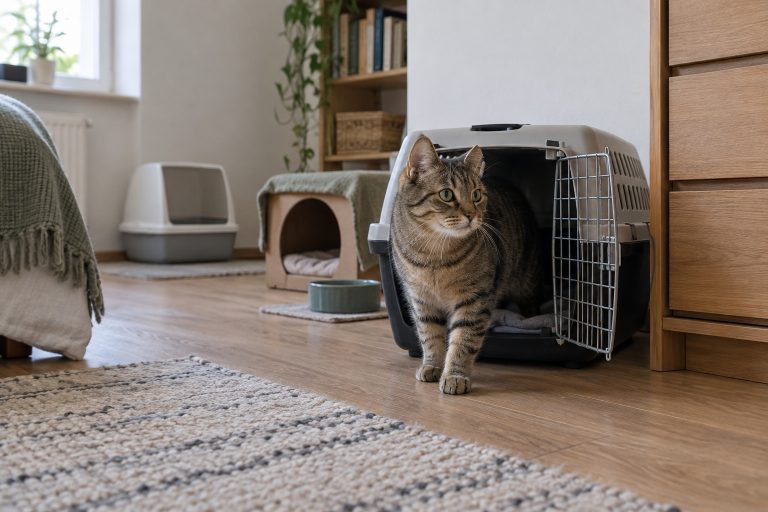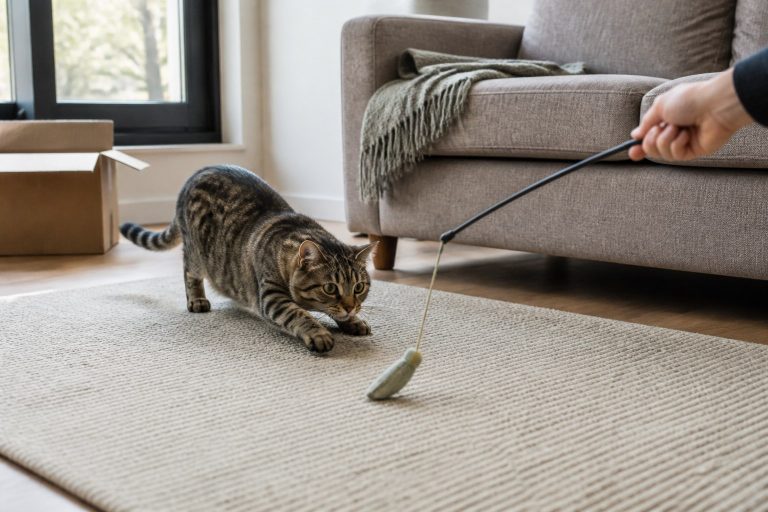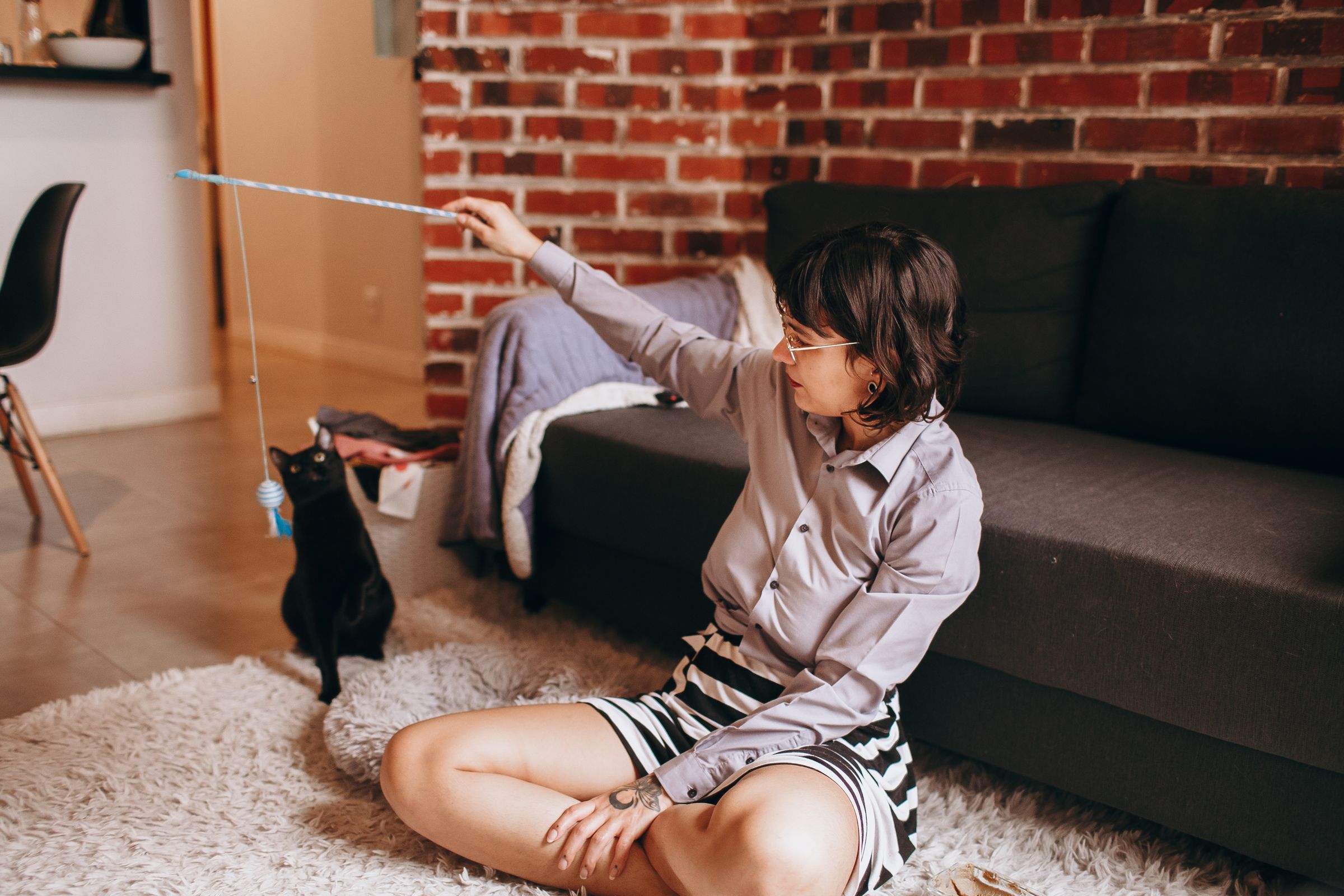

Play often disappears from a working day for an unglamorous reason: the toy is in the wrong room. If the wand is buried in a closet while the cat waits beside the desk, beginning takes more effort than it should.
Keep one supervised toy where an adult can reach it quickly but the cat cannot get to the string or detachable parts alone. Then attach play to a moment that already happens—making breakfast, closing the laptop, putting down a work bag, or dimming the lights in the evening. A repeatable short session is more useful than an elaborate plan that survives for two days.
This article covers interactive play around a working day. Windows, scratching, climbing, food seeking, resting places, and safe independent activities belong to the broader indoor enrichment routine.
Put Play Next to Something That Already Happens
Exact clock times are easy to miss. Transitions are easier to recognize. Breakfast may happen at 7:00 one morning and 7:40 the next, but the kettle, coffee maker, or first trip to the kitchen still marks the start of the day. The same is true when a laptop closes or someone comes through the front door.
There is no evidence that breakfast, the end of work, or bedtime are uniquely better times to play. Their advantage is simpler: they already happen. A 2024 survey about regular wand-toy play found that caregivers reported barriers including work, fatigue, forgetting, and difficulty making play a daily habit. A routine that needs fresh motivation and a search for the toy every time is carrying unnecessary friction.
Start with one dependable transition. Add a second only after the first has become easy to repeat. People who commute and people who work from home can use the same principle; the available moments will simply be different.
Three Openings in an Ordinary Working Day
The following is an example, not a required number of sessions or minutes. Use the parts that fit the household and the cat.
- Morning: Offer a brief round while breakfast or coffee is getting started. A cat that arrives ready to chase may want faster movement. Another may prefer to watch the toy travel behind a chair leg before deciding whether to join.
- After work: For many households, the most reliable anchor is the moment a bag is put down or the laptop closes. Begin with a familiar movement and let the cat's response set the pace. On a work-from-home day, this can mark the end of work rather than becoming another break that must happen every hour.
- Before bed: Keep this optional. A shorter evening opportunity can fit naturally while the kitchen is reset or the lights go down. It should not be treated as a guaranteed fix for nighttime waking, which can have several causes and needs a broader assessment.
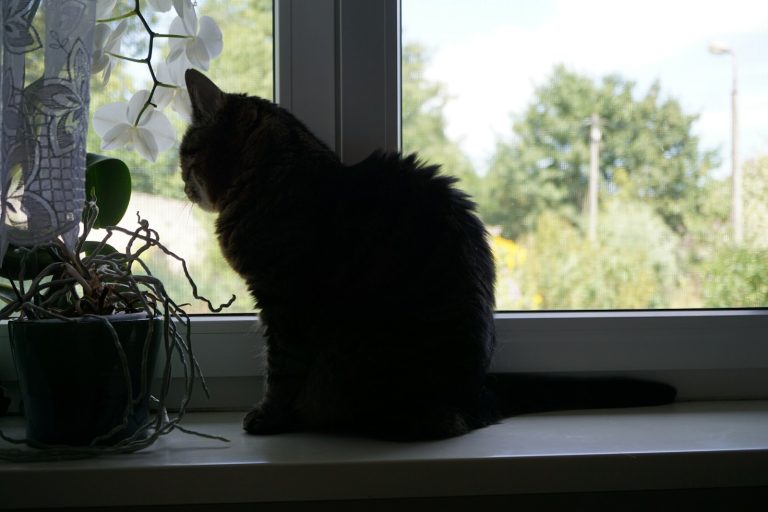
When no one is home, put stringed or detachable toys away. A clear window landing, stable climbing route, scratcher, box, or other familiar independent resource can support the middle of the day. If those routes are awkward, the vertical-space guide is a better place to solve that problem. A window perch or scratcher can make the hours alone better, but it does not replace play with a person.
There is no well-supported universal play quota for every cat. Survey research has found associations between play and some guardian-reported welfare and relationship measures while also noting that more research is needed. Treat the three opportunities above as places to look for a workable routine, not boxes to tick.
Make a Short Session Worth Joining
Interactive play works better when the toy gives the cat something readable to follow. Feline environmental guidance recommends prey-like movement and allowing the cat to capture the physical toy intermittently.
- Move the toy across or away from the cat more often than directly toward the face.
- Let it pause or disappear behind a box, chair leg, or rug edge.
- Allow catches instead of pulling it away at the last moment every time.
- Change the speed or surface when interest fades. Stop if the cat still disengages.
Engagement can be quiet. Watching, tracking with the head, crouching, shifting weight, following, chasing, and grabbing are all useful observations; a cautious or older cat may spend more of the session watching and make only a few controlled reaches.
Let the ending be simple. After a catch, give the cat a moment to hold or investigate the toy. If interest continues, make one or two smaller movements, then put the toy away safely. Hands and feet stay out of the game. If the cat turns away, leaves, or settles into another activity, the invitation is over.
If You Only Have Five Minutes
Five minutes here describes the time available on a difficult day. It is not a researched minimum or a welfare threshold.
- Take the familiar supervised toy that requires the least setup.
- Offer one responsive round at the transition most likely to happen.
- Give the cat room to watch, pursue, catch, or decline.
- Put the toy away safely when the interaction ends.
That is enough for the fallback version. There is no need to compensate with a frantic session or promise a more ambitious routine tomorrow. If the fallback is all that happens for several days, change the setup: move the toy closer, share one anchor with another household member, or drop a planned session that never fits.
Change the Routine When the Cat—or the Day—Changes
Look for a pattern before changing the routine because of one off day.
- Interest disappears quickly: Try one change in movement, surface, location, or timing before buying another toy. A rug edge or doorway can make the same toy easier to stalk.
- The cat waits at a consistent transition: Keep that anchor. Predictability can be useful when it comes from a routine the household can actually maintain.
- The cat remains engaged: Some sessions can continue longer when time allows. There is no need to end because an example schedule said the round should be short.
- The play becomes difficult to contain: Slow the movement, allow a catch, and end before hands or feet become part of the target. Do not punish the cat for becoming highly engaged.
- One cat takes every turn: Use more distance, another room, or separate moments. The AAFP intercat-tension guidelines emphasize individual access and note that subtle staring or route blocking can matter even without a fight.
- Movement looks less comfortable: Keep the toy lower, slower, and within easy reach. International Cat Care notes that a long-handled wand can support controlled play for cats with mobility issues.
- The room keeps getting in the way: Clear a small landing area or reconsider the route using the broader indoor-comfort guide.
A marked or sudden loss of interest deserves more attention than an occasional refusal. If a cat that normally plays becomes reluctant to move, withdraws, or also shows a change in appetite or general activity, contact a veterinarian. Play should not be used to test how much discomfort a cat will tolerate.
Tomorrow, choose one transition you are already likely to keep, place the supervised toy where you can reach it without searching, and offer one responsive round. Add the rest only if that first anchor survives an ordinary week.