
Catification sounds like a renovation project, but in a small home it is really an exercise in finding unused routes. The wall above a cabinet, the end of a bookcase and the space beneath a bench can all add choice without taking over the floor.
The best additions look intentional because they repeat the materials and colors already in the room. They also work for the individual cat rather than copying a dramatic setup from someone else’s home.
Build one useful vertical route
Choose a destination your cat genuinely wants, such as a secure window view or the top of a sturdy cabinet. Create two or three safe steps to reach it using existing furniture or properly mounted shelves. A short, logical route is more valuable than a wall crowded with platforms.
Check weight ratings and wall construction before installing anything. Add a non-slip surface and make sure the descent is comfortable, especially for older or cautious cats.
Let furniture do two jobs
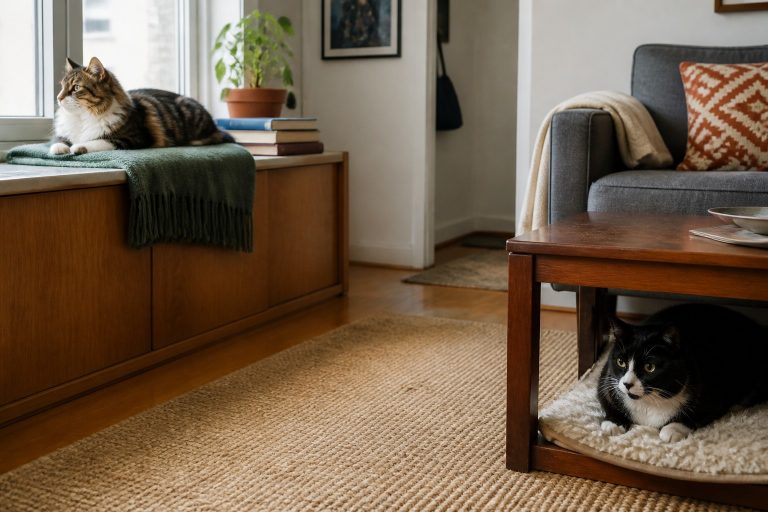
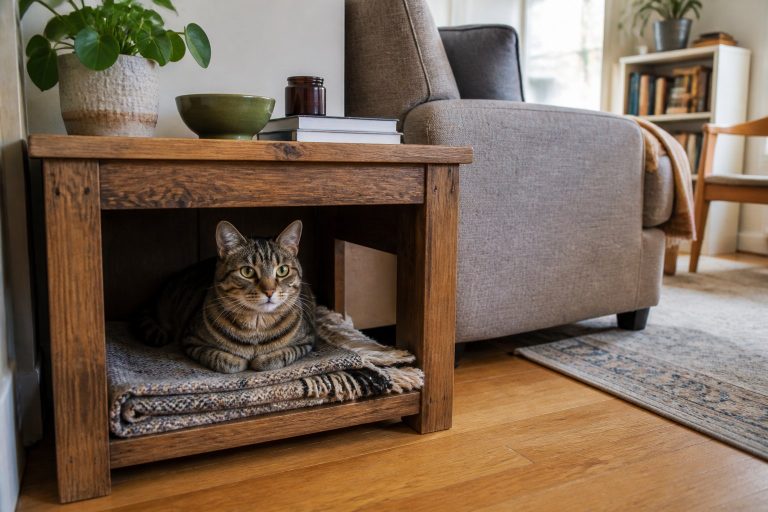
A storage bench can hold supplies and provide a window perch. A side table with an open lower shelf can shelter a bed. The end of a low bookcase can support a slim scratching panel without adding another freestanding object.
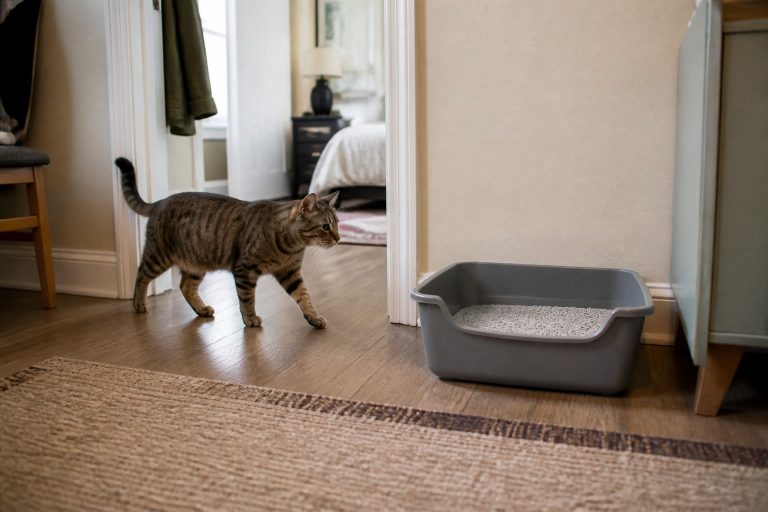
Keep enclosed resting spaces easy to inspect and never store cleaning products beside them. If you use a litter enclosure, prioritize ventilation and cleaning access over the illusion that it is ordinary furniture.
Choose scratchers with a small visual footprint
A tall, narrow post in a neutral material can disappear beside a curtain or sofa arm, while a flat cardboard pad slides beneath a console when not in use. Placement still matters: put the surface where your cat stretches after sleep or marks a route.
Rather than scattering several mismatched products, start with one vertical and one horizontal option. Replace or expand only after you know which texture and position your cat prefers.
Use color and repetition to quiet the room
Repeat one wood tone, fabric color or simple shape across cat items. Washable cushions can echo the sofa, and shelves painted to match the wall feel lighter than high-contrast platforms. This is not about hiding the cat; it is about reducing visual noise.
Leave some open space. Cats need clear landings, routes and floor area more than they need an object in every corner. In a compact home, a window perch, reliable scratcher, high lookout and quiet retreat form a strong foundation—and can still leave the room feeling unmistakably yours.
Before adding anything permanent, mock it up with a chair, box or removable step and watch how your cat moves through the route. A week of observation can prevent a shelf from being placed too high or a bed from occupying an ignored corner. Design becomes simpler when real behavior, rather than an idealized room plan, decides what earns space.