
In a small home, every square foot has a job. The best litter box location is not necessarily the place where it disappears completely; it is the place your cat can reach easily and you can maintain without resentment.
A successful spot balances privacy, ventilation and predictable access. Once those needs are covered, a few thoughtful design choices can help the box sit quietly within the room. From there, a workable litter box area also needs the right box, litter, and maintenance routine.
Prioritize access over concealment
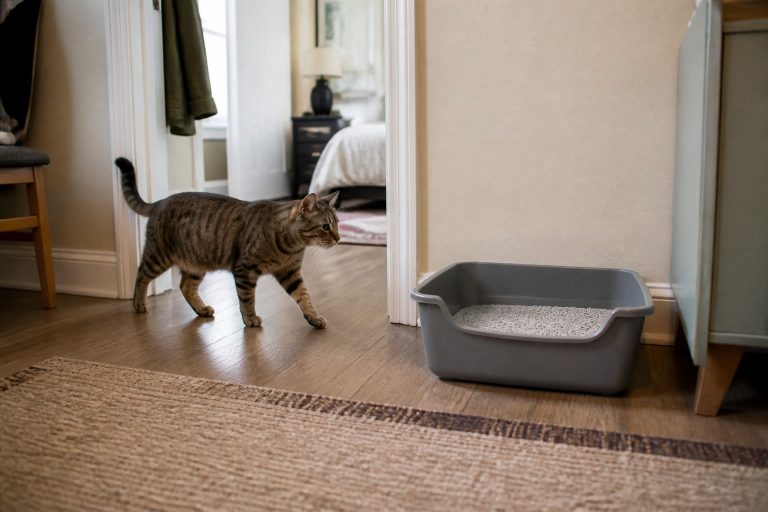
Choose a route that stays open day and night. Avoid closets with doors that may close, balconies with extreme temperatures and laundry areas where a sudden spin cycle can startle a cat. A quiet bathroom corner, a wide hallway niche or the end of a utility area often works better.
Older cats and kittens benefit from a short, obstacle-free path. If your home has more than one level, a box on each occupied level is easier than expecting a cat to navigate stairs whenever nature calls.
Give the box breathing room
Good ventilation matters, but placing a box directly beside a noisy extractor fan is not ideal. Look for gentle airflow and enough space to scoop from the front or side. A box pushed into a tight cabinet can trap odor and make routine cleaning awkward.
Keep litter away from food and water. Even in a studio, opposite sides of the room create useful separation. A slim screen, open shelving unit or plant-safe room divider can provide a visual boundary without blocking air.
Contain tracking without creating a trap
Set the box on a mat that extends beyond the exit, especially if your cat steps out energetically. A high-sided open box often contains scatter better than a tiny covered model while still giving the cat a clear view and easy escape route.
Furniture enclosures can look tidy, but they should be roomy, ventilated and easy to open fully for cleaning. If your cat hesitates, waits outside or stops using the box, remove the enclosure and return to a more open setup.
Test the location before committing
Live with the proposed spot for a week before buying custom furniture or drilling shelves. Notice whether doors bump the box, guests crowd the route or litter lands in a hard-to-clean seam.
The right location is the one your cat uses consistently and you can scoop every day. In a compact home, reliability is more valuable than perfect concealment—and a clean, simple box usually attracts less attention than an elaborate solution that is difficult to maintain.
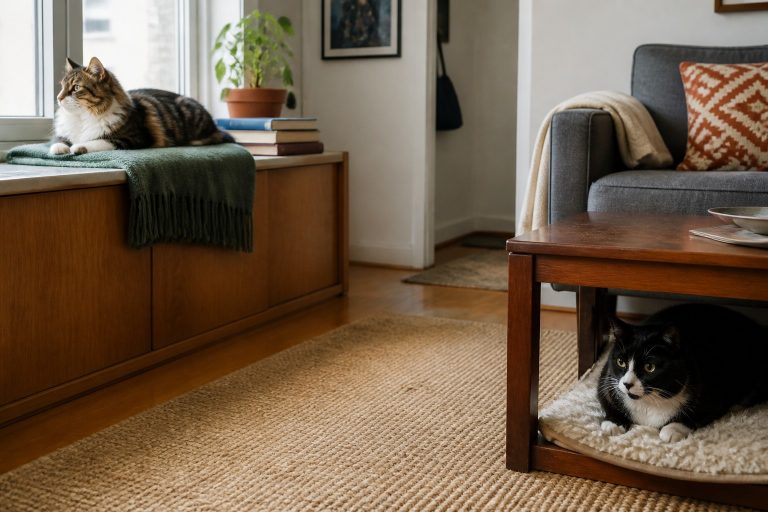
If you live with more than one cat, try to provide more than one box even when space is tight. Two modest boxes in separate locations can be more comfortable than one oversized shared station. Watch for waiting, guarding or one cat approaching only when the room is empty; those subtle patterns can show that access is less relaxed than it appears.