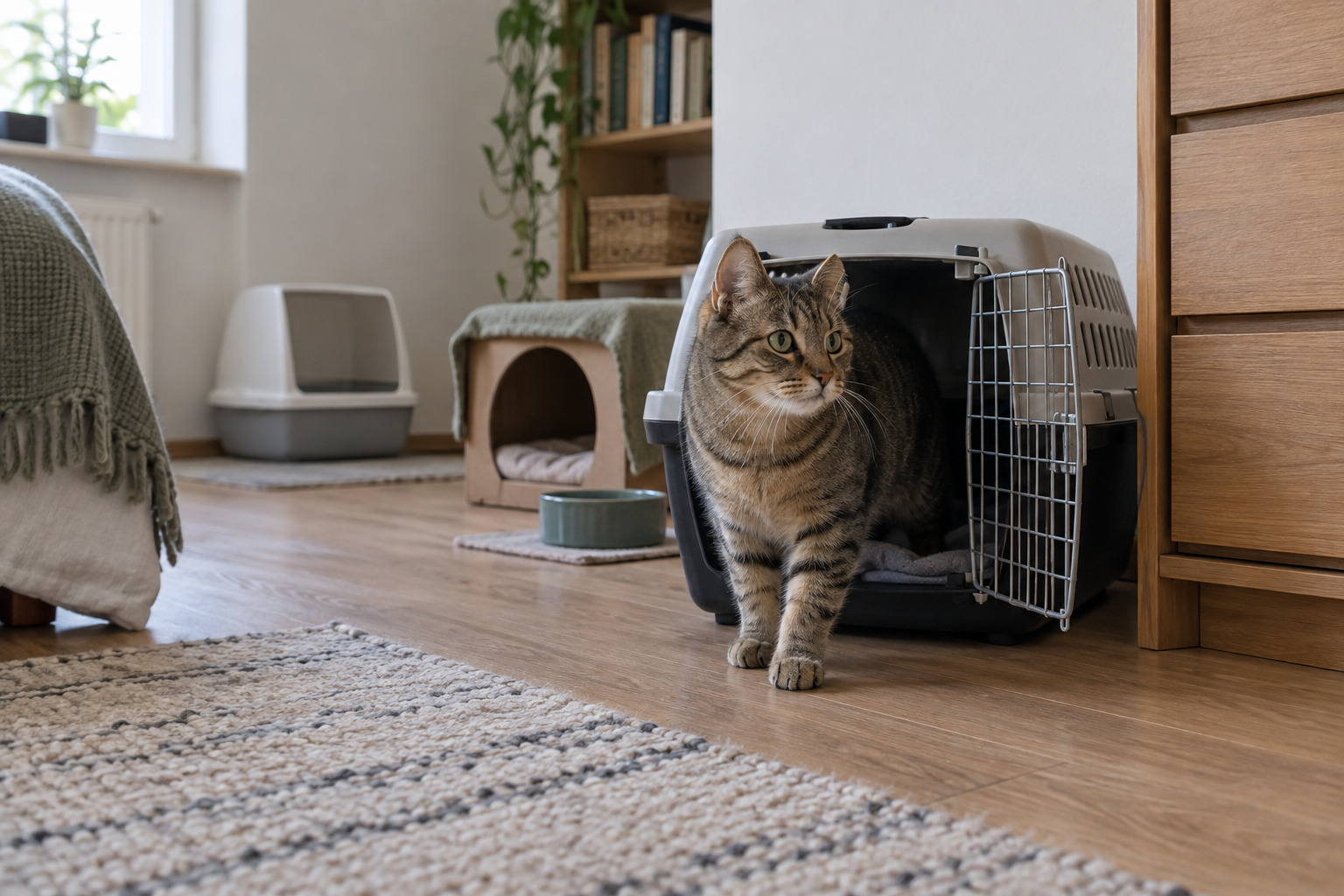

The first room begins before the carrier door opens.
Set the carrier down, close the room door, and check the space one last time. The litter box is reachable. Water cannot be knocked over by an opening door. There is somewhere to hide that you can still safely access if needed. No one is waiting to lift the cat out for a welcome.
This room is not a holding area until your new cat becomes brave enough for the rest of the home. It is a small, readable home base: a place where the cat can find essentials, watch the household at a manageable distance, and return after exploring. During the first week, the useful question is not “What day should we open another door?” It is “What is this cat able to do comfortably and consistently here?”
Build a Small Base That Is Easy to Understand
A useful first room does not need to be empty, decorative, or devoted entirely to the cat. A quiet bedroom, office, or other closable room can work if the basics are easy to reach and the household can keep traffic low.
Start with the essentials:
- a stable litter box in a spot the cat can approach without crossing a busy doorway;
- water and food placed away from the litter box, and separated from each other where the room allows;
- a resting place and at least one useful retreat;
- a stable scratching surface;
- a clear route between them.
The point is legibility, not a perfect floor plan. Feline environmental-needs guidance emphasizes safe places and separated key resources. In a real room, that may mean putting water on the opposite wall from the litter box rather than trying to achieve an ideal distance that the room cannot provide.
Look at the space from the cat’s height. A laundry basket that seems harmless from above may block the only route behind the chair. A humming appliance may make the litter corner feel exposed. A door can swing into a bowl. Move those conflicts before the cat has to solve them.
When the room is secured, place the carrier on the floor against a wall or other stable edge and open it. Then give the doorway space. You can sit quietly nearby, but reaching in, tipping the carrier, or pulling the cat out removes the choice that makes the room useful. Established bringing-home guidance likewise recommends preparing the safe area first and allowing the cat to emerge in its own time.
Let Hiding Remain Useful
Some cats walk out and inspect every corner. Others stay in the carrier or disappear into the first available cover. Hiding on arrival is not, by itself, evidence that the setup has failed.
What matters is whether the hiding place works. It should be dry, stable, away from household hazards, and connected to the room rather than trapping the cat behind furniture. You should not need to dismantle a bed or drag the cat through a narrow gap in an emergency. A cardboard box on its side, a covered bed, the open carrier, or a safely draped chair can provide cover without creating an inaccessible void.
Small shelter studies found that access to hiding boxes was associated with faster reductions in behavioral stress scores, but those group findings do not create a timetable for a cat in a home. They support the value of refuge, not a rule that hiding must stop by a particular day. If this room needs better cover, the deeper guide to a retreat that is protected without becoming a dead end can help.
Keep essentials near enough that the cat can reach them without crossing an exposed room, but do not crowd food, water, and litter into the hiding spot. Resist repeatedly checking under the bed, bringing visitors in for introductions, or placing treats so close that the cat must choose between hunger and contact. Quiet presence is different from pressure.
Watch the First Week Through Ordinary Functions, Not Milestones
The first week is useful as an observation window, not a seven-day program. A popular “3-3-3” rule may be a reminder that adjustment takes time, but research does not establish three days, three weeks, and three months as a feline biological schedule.
Watch ordinary functions instead. Is the cat:
- eating and drinking, even if mostly when the room is quiet;
- urinating and passing stool without visible difficulty;
- resting in more than a tightly vigilant crouch;
- grooming, stretching, scratching, or changing sleeping positions;
- approaching a person, toy, sound, or doorway by choice;
- returning to the retreat and settling again after a small disturbance?
No single item proves that the cat is ready for more space. The pattern is more useful. A cat who plays briefly but has not used the litter box needs a different response from one who eats, toilets, rests, and begins waiting at the door after several calm household cycles.
Keep notes short enough to use: food touched, water level changed, litter used, where the cat rested, and what prompted voluntary movement. This is not a performance chart. It prevents the household from mistaking one bold dash into the hallway—or one quiet afternoon—for the whole picture.
If you cannot tell whether resources are being used, make observation easier before changing the room. Level the litter surface so new marks are visible. Offer measured portions instead of repeatedly topping up a full bowl. Notice the water level. These are household checks, not substitutes for veterinary advice.
Make the Household Predictable Before Making It Bigger
For a new cat, the room is only part of the environment. Footsteps, doors, voices, feeding, lights, vacuuming, and the appearance of people all form a pattern. A manageable pattern makes the next piece of the home easier to interpret.
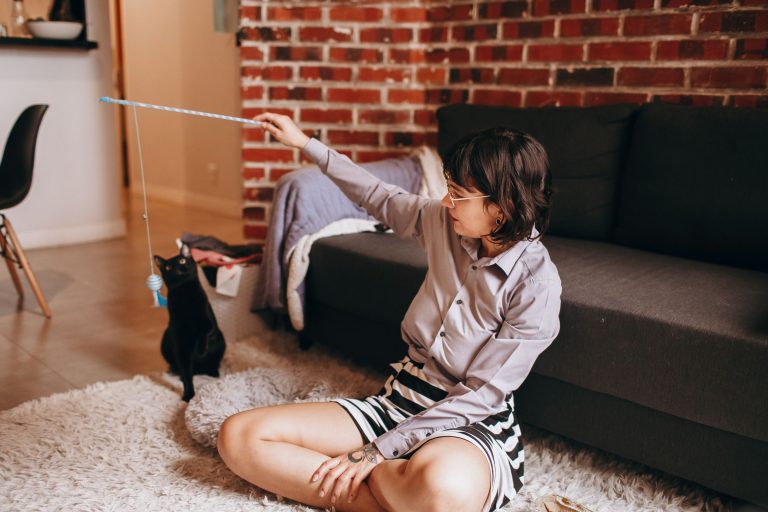
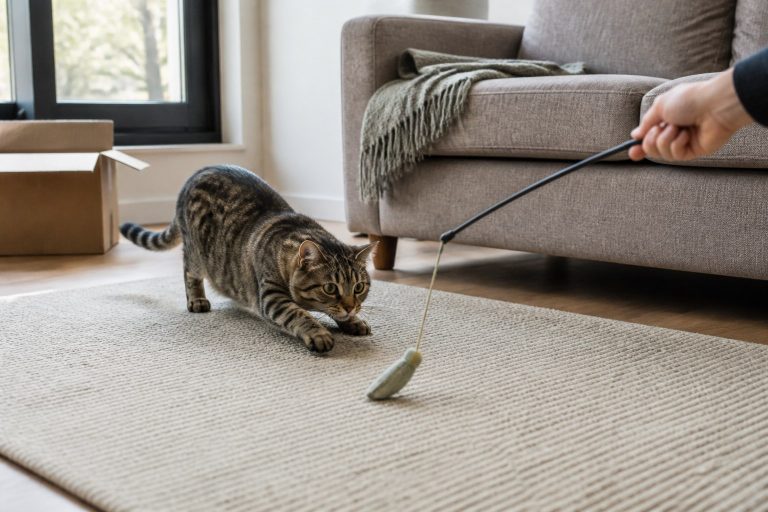
Keep the first days ordinary but restrained. Feed and refresh water in a fairly consistent sequence. Enter without surrounding the cat. Let one or two people become familiar before rotating a crowd through the room. Offer play or contact, then accept a refusal. If the cat approaches, keep the first interactions short enough that the cat can leave without escalating the message.
This does not require silence or a perfectly controlled household. It means avoiding avoidable surprises: a vacuum beside the carrier, a dog nosing through the doorway, children blocking the retreat, or everyone changing the setup at once. Familiar bedding or an object carrying the cat’s existing scent can stay if it is clean and safe; the whole room does not need to be replaced with newly purchased “starter” gear.
In a home with resident cats, the first-room door is also a boundary between animals. Scent and sound may already be meaningful on both sides. Do not treat a quiet moment at the door as permission for an unsupervised face-to-face meeting. Full introductions are a separate process; the guide to resource layout in a multi-cat home explains why shared access can create pressure even when the cats are not openly fighting.
Add More Home One Layer at a Time
There is no universal day when the first-room door should stay open. Consider more access when the cat is using essential resources, recovering after ordinary household sounds, and showing voluntary interest in the door or life beyond it. The next area must also be ready.
Before expanding, check the next area for household hazards and unstable routes. Close exterior doors and unsecured windows. Remove reachable string, fragile objects, toxic plants, recliner hazards, and gaps that would be difficult to access safely. If another animal lives in the home, keep following the separate introduction plan rather than using exploration as the introduction.
Start with one adjacent area during a quiet period. Keep the original room open so retreat remains possible. The cat should not have to cross a person, dog, noisy appliance, or closing door to get back. Avoid carrying the cat into the new space to make exploration happen; that changes a voluntary route into a placement.
Then observe the return, not just the outward trip. Can the cat find the base again? Does the cat resume eating, resting, and toileting afterward? Does the larger area create prolonged hiding in a less safe location, frantic movement, conflict, or difficulty reaching essentials? If so, reduce the area and revise the route. That is not failure. It is a reversible household adjustment.
Some cats may be ready to repeat a calm expansion quickly. Others need the base to remain their main territory for longer. A shy cat is not behind schedule, and a confident cat is not automatically ready for an entire home.
Know When This Is No Longer Just Settling In
Hiding and reduced social contact can be ordinary after a move, but “new cat” should not become an explanation for every change. Contact a veterinarian if the cat is not meaningfully using food, water, or the litter box; is vomiting repeatedly; has persistent diarrhea; appears markedly weak or painful; or shows a concerning change that is not improving.
Difficulty breathing needs prompt veterinary care. Straining, repeated litter-box attempts, crying while trying to urinate, or producing little or no urine can signal an emergency; Cornell’s feline urinary guidance advises immediate treatment for suspected obstruction. Do not wait for the settling period to end.
If you are unsure, call the veterinarian or adoption organization with concrete observations: what the cat consumed, what appeared in the litter box, when the change began, and what the cat is doing now. That is more useful than trying to decide whether the cat is simply nervous.
Before opening another door tonight, return to the first room and inspect it once from floor level. Make one fix—a clearer route, a quieter retreat, a steadier bowl, or an easier return path. A base the cat can understand is what makes the rest of the home possible.