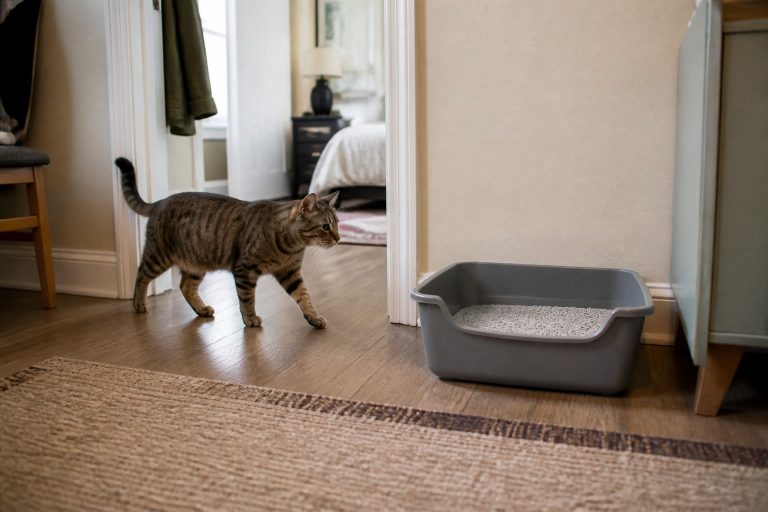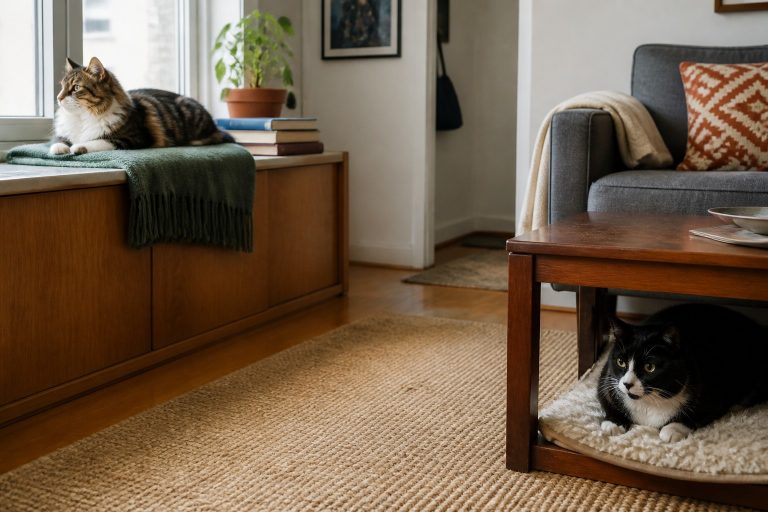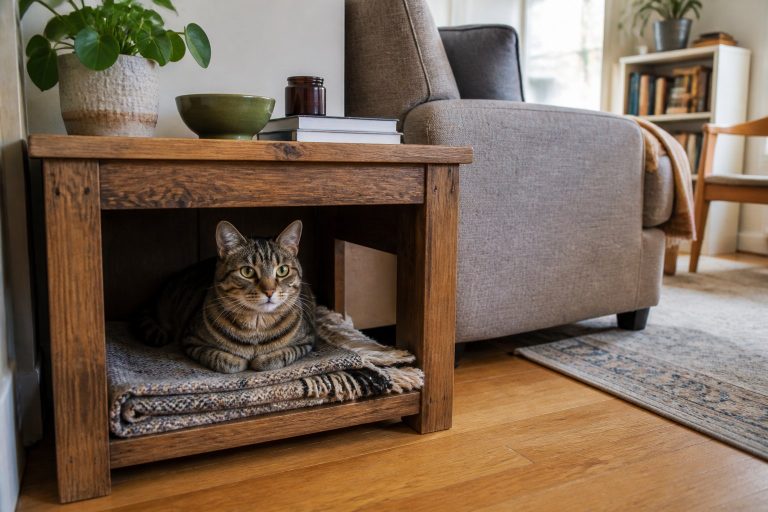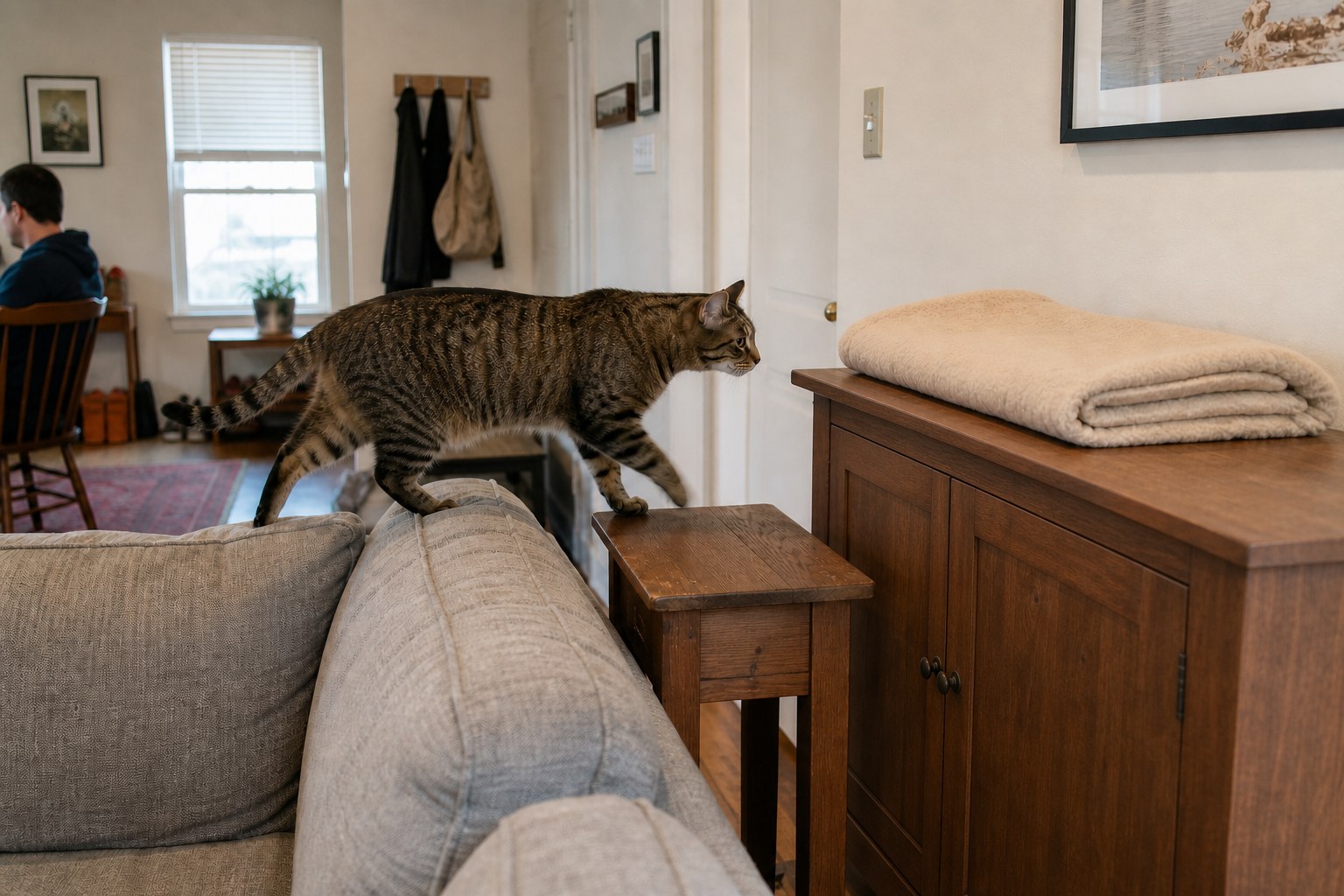

A cat tree can stand untouched in one corner while the cat sleeps on top of a cabinet every afternoon. The difference is rarely that one object is officially “for cats.” The cabinet may offer a better view, a quieter edge of the room, an easier approach, or a place close to household activity without being in its path.
Useful vertical space is not a collection of high surfaces. It is a route: somewhere worth going, a believable way up, enough room to pause or rest, and a way down that still feels manageable when the room is busy.
Before choosing a cat tree or mounting anything, watch the paths your cat already chooses. The goal is to extend those choices, not impose an impressive design the cat has no reason to use.
Height Is Useful Only When It Serves a Purpose
Elevated places can do several jobs. A cat may use one to monitor a doorway, watch people without being underfoot, rest away from a dog or child, look outside, or move through a room without crossing the busiest part of the floor.
The AAFP/ISFM environmental-needs guidelines describe elevated areas as part of a cat’s environmental resources and note that they allow cats to monitor their surroundings. They also describe safe places as often raised, though a useful safe place can also be concealed or low. Height is one form of choice, not a universal ranking system.
That distinction explains why the tallest platform is not automatically the best one. A high shelf facing a blank wall may offer less value than the back of a sturdy sofa with a view of the room. A window perch may be popular in the morning and ignored when it becomes hot in the afternoon. A cat may want elevation during family activity and a covered floor-level retreat when visitors arrive.
Current feline-enrichment guidance supports providing structures at different heights for vantage, movement, rest, and retreat, while also acknowledging that the evidence base is still developing. In a real home, use those functions as possibilities to test rather than promises about what a particular cat will prefer.
Start With a Destination, Not a Piece of Furniture
Begin by identifying a place the cat already tries to reach or a function that is missing. Common destinations include a secure window view, the quiet end of a shared room, a warm resting place, or a position near people that stays outside the main walking path.
Then look at the room from that destination backward. Where would the cat place the final paw before arriving? Is that landing clear, or does it require a jump through plants, frames, or a lamp? Can the cat turn around? Does the route remain available when a door opens, a chair is moved, or someone sits on the sofa?
This is where many attractive setups fail. They begin with an empty wall and add shelves as decoration, but never connect them to anything useful. Another common failure is a good destination with no plausible approach: the window ledge is wide, but the jump begins on a slippery table; the cabinet top is comfortable, but the only descent lands beside a noisy appliance.
The broader room-by-room cat-friendly home checklist can help identify where the household’s routes and resources already work. For this project, choose one room and one destination. A short route that solves a real access problem is more useful than a dramatic wall that goes nowhere.
Build the Route in Both Directions
Cats can jump, but the fact that a jump is possible does not make it a good everyday route. Confidence, age, body condition, vision, previous experience, surface grip, and what is happening below all affect how a gap feels.
Plan the climb as a sequence of takeoff points and landings. There is no evidence-based shelf spacing that suits every cat, so use the individual animal as the measure. A confident young cat may skip a middle step. A cautious, large, older, or less mobile cat may need lower changes in level and more room to gather its feet.
Check the descent separately. Coming down places different demands on balance and landing. A cat that reaches the top by scrambling may hesitate there because the return path is unclear. If the cat repeatedly calls from above, lowers the front feet and retreats, or chooses a risky leap to the floor, the route needs another stage rather than more encouragement.
Before installation, you can test the logic with stable household furniture already rated and positioned for its normal use: a chair beside a low cabinet, for example, or a bench leading to a window seat. Do not stack loose boxes, stools, or tables into a temporary tower. The mock-up should be safe enough to use, not merely close enough to prove an idea.
For a kitchen observation spot, keep the approved perch out of the food-preparation zone and avoid turning it into a launch point toward the counter. The separate guide to reducing kitchen-counter use without punishment covers the behavior plan; vertical design only supplies the acceptable destination.
Make Every Landing Feel Reliable
A landing needs to remain still when the cat arrives. Wobble, flex, a sliding cushion, or a shelf that tips slightly under changing weight can be enough to end the experiment. Freestanding furniture should be stable and resistant to tipping; mounted structures must suit the wall, hardware, and intended load. When those details are uncertain, use the manufacturer’s installation requirements or a qualified installer rather than guessing.
Usable surface matters too. Professional feline-environment guidance recommends perches wide and long enough for a cat to stretch. That does not translate into one standard dimension, but it rules out decorative ledges that barely hold four paws. A resting destination needs more room than a transition step, and a large cat needs more usable surface than a small one.
Add traction where a polished surface makes takeoff or landing uncertain. A secured, low-profile mat or fitted washable cover can help; loose fabric that slides or bunches creates a different problem. Keep the edge clear of breakable objects and make sure a landing does not disappear when the surface resumes its human job.
Comfort gives the cat a reason to stay. A familiar blanket on a broad cabinet top may outperform an elaborate bare shelf. A slightly screened perch may suit a cat that wants to observe without being fully exposed. If the route passes a place where the cat already stretches after resting, a stable scratching surface can support that transition; the scratching redirection guide owns the deeper placement and material decisions.
Fit Vertical Space Into the Room You Already Have
Start with architecture and furniture that already earn their floor space. The end of a sofa, a sturdy bookcase, a storage bench, a broad windowsill, or the cleared top of a secured cabinet may form part of a route. Sometimes the only new element needed is one well-placed intermediate step.
This approach is especially useful in a small home because the route can share space without creating another bulky zone. The small-space catification guide explores how furniture can perform more than one job. Here, the test is simpler: does the human use of the room keep the cat route dependable?
A dining chair is a poor permanent step if it moves three times a day. A shelf above a door may look efficient but place the cat over a noisy, unpredictable bottleneck. A bookcase top is not usable if it becomes seasonal storage. The cat does not experience the room as a photograph; the route must survive ordinary life.
Keep circulation clear for people as well. Do not create head-level corners in narrow passages, force a person to duck beneath a landing, or position a launch point over food, a stovetop, fragile equipment, or an exterior door. Vertical space works best when it reduces competition for the floor without transferring the conflict elsewhere.
In a Multi-Cat Home, One Route Is Not Enough
A single tall structure can add square footage without adding meaningful choice. If one cat can watch the only ladder, occupy the top platform, or block the descent, the resource may be technically present but socially unavailable.
The 2024 AAFP intercat-tension guidelines recommend vertical places at different heights, safe places in cats’ preferred areas, and entry and exit options that reduce blocking. This does not mean every room needs duplicate cat furniture. It means the valuable places should not all depend on one narrow approach.
Look for bottlenecks: a shelf route that ends in a corner, a window perch with one access chair, or two beds arranged so one cat must pass directly beside the other. An alternate descent may be a second shelf, the opposite arm of a sofa, or another stable piece of furniture. Visual separation can matter as much as distance; two resting places facing each other across a narrow room may offer less choice than two modest spots that are not in direct view.
Use behavior, not apparent sharing, as the test. One cat waiting until another leaves, abandoning a climb after being stared at, or taking a long detour can signal that access is constrained even when there is no fight. Add or redistribute options before adding more height to the same contested structure.
Let the Cat Audit the Design
Introduce one route and leave it available long enough to become ordinary. You can place familiar bedding on a destination or reward calm investigation, but do not lure the cat across a gap you are not sure it can navigate. Watch what happens without repeatedly placing the cat on the highest surface.
Useful observations are concrete:
- Does the cat approach without pacing or repeated failed jumps?
- Which steps are used, skipped, or avoided?
- Can the cat turn, settle, and leave without backing into an edge?
- Does the route still work when the room is being used normally?
- In a multi-cat home, can each cat reach and leave a preferred place without passing through another cat’s control point?
- Does the cat return on its own over several days?
An ignored route is information. The destination may not be valuable, the approach may feel exposed, the surface may move, or the cat may simply prefer another location. Change one variable at a time so you can see what matters.
Access may also need to change over a cat’s life. International Cat Care’s home-modification guidance recommends small steps or non-slip ramps to help cats reach chosen resting and vantage points when mobility is reduced. Lowering the stages can preserve a favorite view without asking for the same jump as before.
If a cat that used a familiar route comfortably begins hesitating, missing landings, or avoiding it, treat that as a change in movement rather than a design verdict alone and discuss it with a veterinarian. For ordinary design adjustments, the cat’s repeated choices provide the clearest edit: keep the destinations that earn use, improve the weak transition, and remove what only occupies the wall.
Vertical space succeeds when it becomes part of daily movement—a quiet route to a useful place—not when it looks complete on installation day. If the route is only one part of an indoor-cat plan, the enrichment-routine guide can help connect observation, play, searching, and rest without filling the home with more objects.